Could sustained workplace pressure be affecting you more than you realise?
A free guide to help you recognise the effects of sustained workplace pressure, understand what they may mean and begin looking at workplace stress through a different lens.
See how sustained pressure can affect thinking, recovery and everyday functioning.
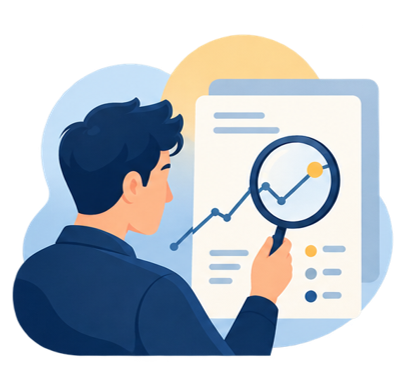
See the pattern
Individual experiences tell part of the story. Seeing how they fit together reveals much more.
Look differently
A different perspective can change the questions you ask about your own situation.
The moment work starts to feel different
Small changes can reveal a bigger pattern
Pressure is part of working life. Most demanding periods pass, recovery follows and everyday life returns to its usual rhythm.
Sometimes pressure continues for longer. You keep working, meeting deadlines and managing your responsibilities. At the same time, concentration may require more effort, recovery feels less complete, or work simply doesn't feel the way it used to.
Understanding workplace stress often begins with this feeling that something has changed, without being able to explain exactly what or why.
We naturally try to understand our experiences one at a time. Feeling tired after a busy week, finding it difficult to concentrate during an important project or becoming impatient after a stressful meeting can each have an explanation.
Seen individually, these experiences may tell us very little. Seen together over time, they can begin to reveal a pattern.
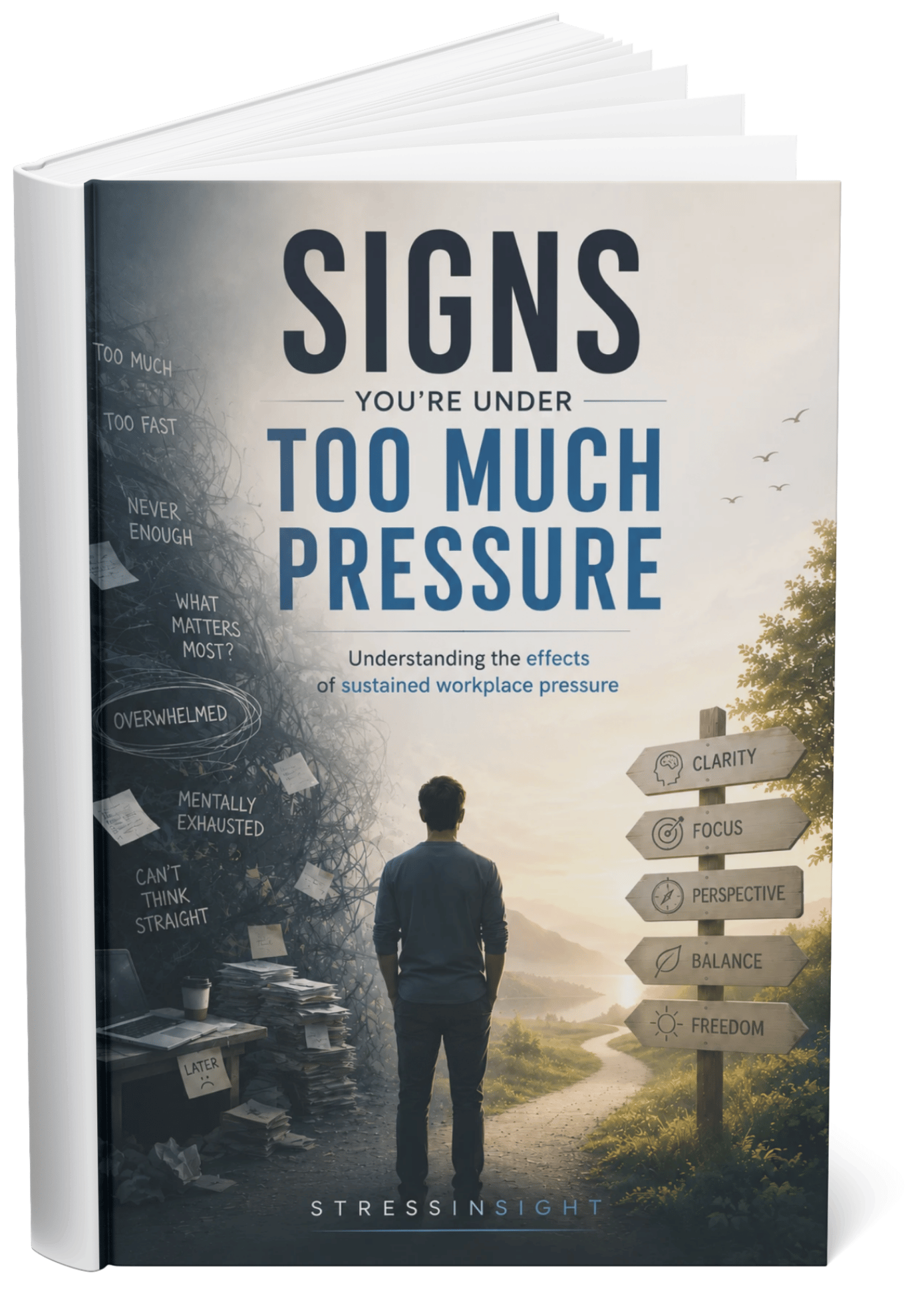
That is where Signs You're Under Too Much Pressure begins.
Move from noticing individual signs to understanding the bigger picture
1
Recognise what is changing
Sustained workplace pressure can gradually affect the way you think, feel, recover and function. Learn which changes may be worth paying attention to, and why experiences that become more frequent or persist over time can matter.
2
Awareness
Individual experiences can seem ordinary when viewed on their own. Learn how looking at them together can reveal a broader pattern and give you a clearer picture of how ongoing pressure may be affecting you.
3
Reflection
Explore how demands, stress, adaptation and recovery are connected and what can happen when recovery no longer keeps pace. This perspective can help you begin to understand what the pattern may be telling you about how you are adapting to the demands you face.
What happens next
Your guide, AI support and further guidance in one learning environment
After requesting Signs You're Under Too Much Pressure, you'll receive access to the StressInsight learning environment, where you can download the guide and return to it whenever you like.
You'll also have access to the Stressinsight AI Guide, which can help you explore the ideas in the guide and relate them to questions that come up as you read.
Over the following days, a short series of emails will build on what you've learned and help you continue looking at workplace pressure through the StressInsight perspective.
Everything remains available, so you can explore it in your own time.
Built on science. Written for everyday working life.
Signs You're Under Too Much Pressure is part of the Stressinsight learning environment, where current scientific understanding of workplace stress is translated into practical guidance for everyday working life.
Written by neuroscientist Erwin van den Burg, the guide draws on current scientific understanding while remaining accessible, practical and relevant to the experiences people have every day.
It was written with one purpose in mind:
To help you recognise the effects of sustained workplace pressure and better understand what they may be telling you.
Pressure
Indicators
Understand your pressures today
Navigating workplace demands can be challenging. Recognizing the early signs of pressure is crucial for maintaining your wellbeing. This guide provides insights into subtle shifts in focus, emotions, recovery, and performance that can lead to overwhelm.
Jane Doe
Many professionals overlook their stress levels until they escalate. Understanding the balance between workload and personal capacity is essential. This guide helps illuminate patterns that could signal the need for change before it's too late.
John Doe
Feeling like you're managing, but something feels off? This guide assists in identifying overlooked signs of sustained pressure. It offers clarity on your reactions and considerations for addressing them before they escalate further.